
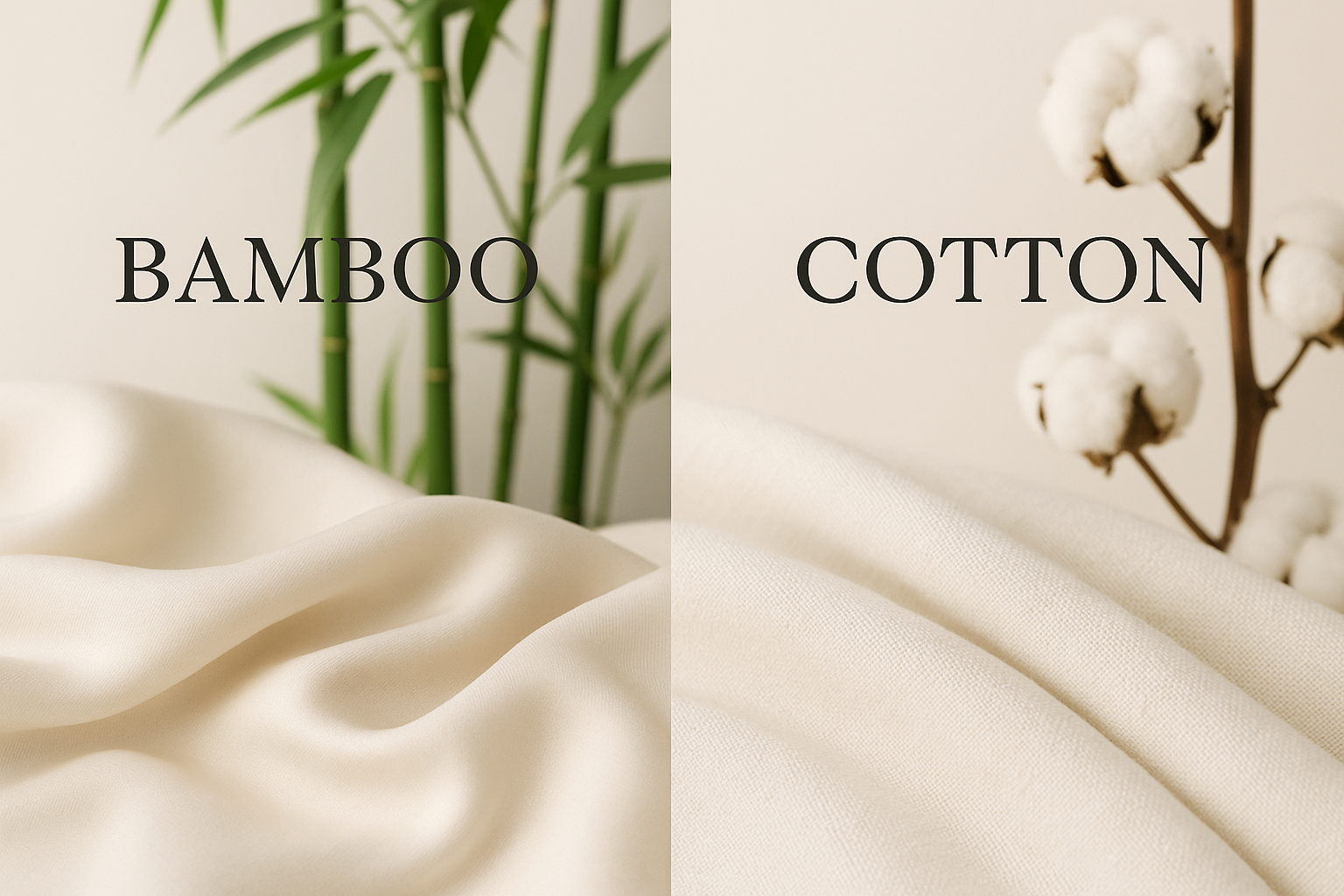
Parents often ask whether bamboo or cotton is better for eczema-prone skin. The honest answer is that there is no universal winner. A child may find either material comfortable, and the finished garment—its texture, fit, seams, labels, dyes and laundry residues—can matter as much as the fibre name.
Clothing does not treat eczema. If a child has persistent, worsening, infected or sleep-disrupting symptoms, seek advice from a qualified healthcare professional.
What dermatology guidance says
The American Academy of Dermatology suggests considering soft, natural-fibre clothing such as cotton, cotton blends, silk or bamboo. Its wider eczema-friendly product guidance also emphasizes loose-fitting clothing, avoiding known irritants and working with a dermatologist to identify individual triggers.
That means “bamboo versus cotton” is best treated as a personal comfort comparison, not a medical ranking.
How to compare bamboo and cotton garments
| What to check | Why it matters |
|---|---|
| Surface feel | Choose the finished garment that feels smoother against your child’s skin; processing and construction affect both fibres. |
| Fit | A looser, comfortable fit may reduce rubbing and heat build-up compared with tight clothing. |
| Seams and labels | Raised seams, rough trims and neck labels can irritate some children regardless of the main fabric. |
| Laundry products | Fragrance and product residues can be triggers for some people. Follow medical guidance and rinse garments thoroughly. |
| Individual response | Observe your child. A material that works well for one person may not suit another. |
Practical clothing routine
- Wash new clothing before first wear.
- Choose a comfortable fit and inspect seams, fasteners and labels.
- Use the laundry routine recommended for your child and avoid known triggers.
- Introduce a new garment when symptoms are stable so it is easier to notice individual reactions.
- Stop using an item if it appears to aggravate the skin.
About Hae Hae’s bamboo-blend clothing
Hae Hae’s main fabric is 95% bamboo and 5% spandex. Products are sewn by Hae Hae’s own team at its owned Batam manufacturing facility. Every component used—including fabric, zipper, sewing thread, elastic band, microfibre fill and size label, where applicable—was OEKO-TEX® certified when Hae Hae purchased it.
OEKO-TEX® certification means the certified components were tested under the applicable standard. It does not mean a garment will prevent or treat eczema, and it is not a medical or allergy certification.
Parents who want to compare the fabric and fit can browse bamboo baby clothes and kids’ pyjamas. For the founder’s personal experience—clearly separated from medical advice—read the story behind Hae Hae.
Share:
When can a child use a pillow? Singapore safety and size guide
Why I started Hae Hae: our family’s eczema story