
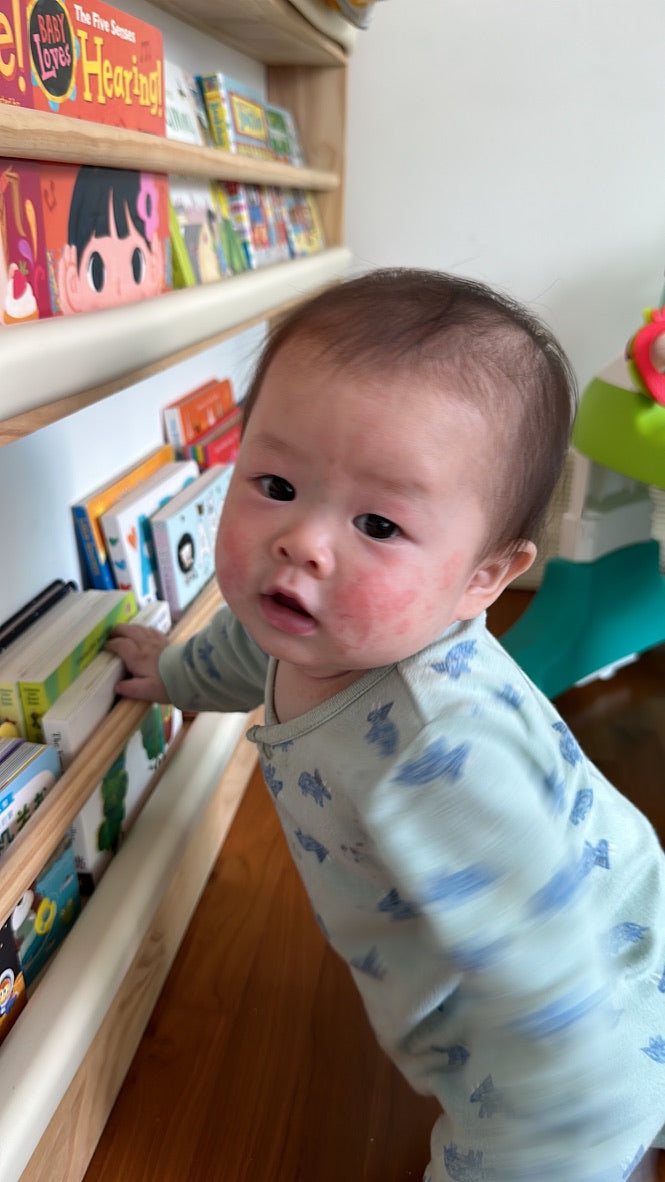
Reviewed 24 July 2026. This is our family’s experience, not medical advice. Eczema should be assessed and treated with guidance from a qualified healthcare professional. Clothing can affect day-to-day comfort, but it does not treat or cure eczema.
When my daughter Hae In was a baby, she developed red, irritated patches on her face, arms and leg folds. Watching her feel uncomfortable was heartbreaking. We sought medical help and followed the care plan recommended by her clinicians, including prescribed treatment and a gentler bathing and moisturising routine.
What clothing could—and could not—do
Medical care was the foundation of her eczema management. We also paid attention to ordinary sources of discomfort such as rough neck labels, exposed zipper areas and clothing that felt uncomfortable during sleep.
For home and sleepwear, our family preferred a soft, stretchy fabric and designs that covered the skin without bulky trims. That preference was personal; it is not evidence that one fabric works for every child. The American Academy of Dermatology recommends choosing soft, breathable clothing and avoiding known individual triggers, while also following a dermatologist’s treatment plan.
Read the American Academy of Dermatology’s guidance on eczema-friendly products.
The problem I wanted to solve
As Hae In grew quickly, regularly replacing soft sleepwear became expensive. I wanted to make comfortable everyday pieces at a more accessible price, with practical details informed by our own experience.
That led our family to establish Hae Hae and our own production facility in Batam. Our team cuts and sews the garments there, which lets us inspect stitching, zipper guards and finishing directly and reduce intermediary markups.
What Hae Hae garments are made from
Our main stretch fabric is 95% bamboo-derived viscose and 5% spandex. Components purchased for the garments—including fabric, zippers, sewing thread, elastic bands, microfibre fill and size labels—were covered by OEKO-TEX certification at the time we bought them. OEKO-TEX certification concerns tested harmful substances; it is not a medical certification and does not guarantee that a product will suit every person with eczema or allergies.
Design details shaped by our experience
- Printed or carefully placed labels: intended to reduce a common source of rubbing around the neck.
- Zipper guards on relevant styles: fabric separates the zipper from direct skin contact.
- Soft, stretchy main fabric: chosen for everyday comfort and ease of movement.
- Direct production oversight: our team can check stitching and finishing before packing.
Where our story leaves us today
Hae In’s skin improved over time while we followed professional medical advice and adjusted her daily care. We cannot separate the effect of any single change, and we do not claim that bamboo clothing caused the improvement.
Hae Hae exists because that experience made us care deeply about practical construction, soft-feeling materials and honest pricing. If your child has eczema, please speak with a healthcare professional about diagnosis and treatment. For clothing, observe your child’s individual comfort and stop using anything that appears to irritate their skin.
Explore Hae Hae bamboo baby clothes or read our evidence-aware comparison of bamboo-derived viscose and cotton for eczema-prone skin.
Share:
Bamboo vs cotton clothing for eczema-prone skin
Bamboo baby clothes in Singapore: a practical buying guide